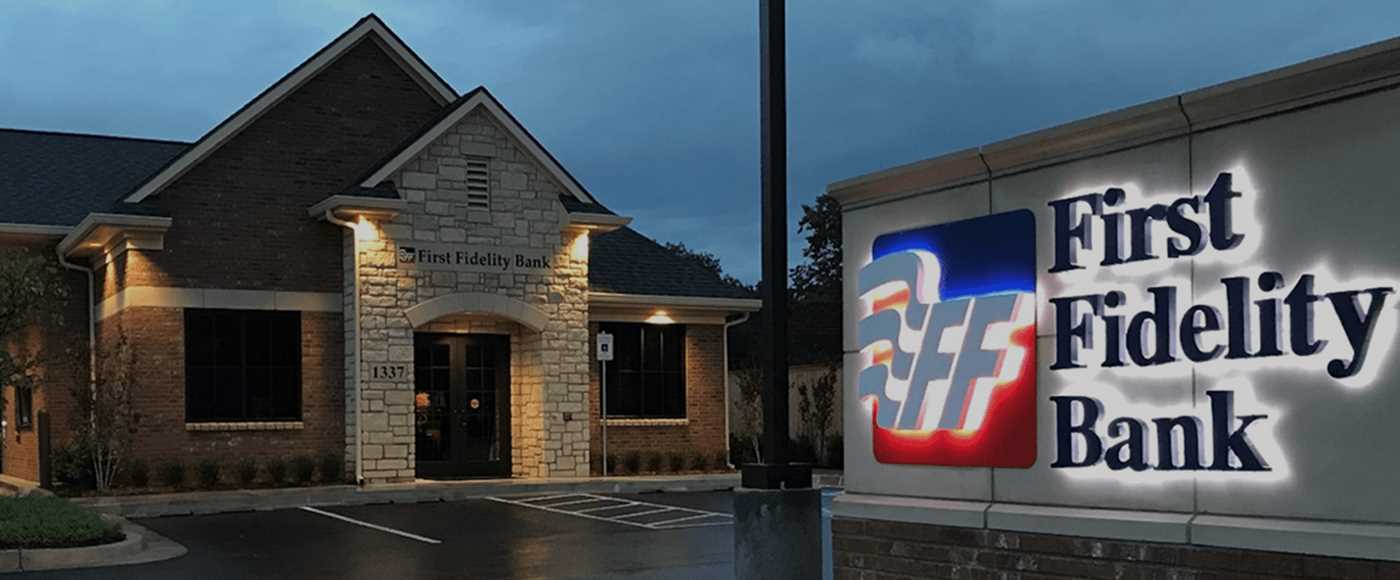
First fidelity bank

Recommendation: Choose products only if the posted APY hits ≥ 4.00% on 12-month CDs, ≥ 0.50% on standard savings, monthly maintenance fee = $0, overdraft charge ≤ $10 per item with a daily cap ≤ $50. If ffb lists weaker numbers, keep only a no-fee checking for bill pay, route high-yield cash elsewhere.
For online access use the official login link from the verified domain, activate MFA via app or SMS, set transaction alerts threshold $1,000, payee lock, travel notice before leaving state. During the first sign-in enter username, temporary password, create a 16-character passphrase with a unique symbol, rotate every 180 days. Data fidelity improves via account nickname conventions, e.g., “Tax-2025”, “Emergency-Fund”.
When you compare pricing, request the disclosure sheet: APY percentage, compounding frequency (daily vs monthly), minimums for bonuses, early withdrawal penalty in months of interest, fee waivers tied to direct deposit volume. For a 12–23-month CD push for penalty ≤ 6 months interest, for 36-month CD ≤ 12 months. Confirm whether interest is paid monthly to an external bank account or added to principal.
Check location coverage via the locator: drive-thru availability, ATM cash deposit capability, Saturday lobby hours, coin handling, notary. For support quality, target phone wait ≤ 3 minutes, email reply ≤ 24–48 hours, mobile app rating ≥ 4.6 on iOS, ≥ 4.4 on Android, dispute resolution within 10 business days. If numbers miss these targets, downgrade ffb to secondary use.
First Fidelity Bank Services, Rates, Branches, Login, and GoBiz FFB
Use the official app or a bookmarked site for login, never a link from email or SMS. Enable MFA via authenticator app or token, set withdrawal, wire, new payee alerts, review sign-in history weekly.
gobiz ffb overview: ACH origination, domestic wires, Positive Pay for checks, ACH, Remote Deposit Capture, user roles with dual approval, per-user limits, card controls, file import for payroll (NACHA), QuickBooks/CSV export.
Access: open gobiz from the ffb homepage via the Business menu, select gobiz. Enter username, answer a security prompt, verify via SMS/app/token, then create a strong passphrase (16+ chars, unique). On first sign-in, set role-based permissions, daily limits, approval workflow.
Pricing: check the disclosures page for APY/APR, wire fees, ACH per-item cost, RDC equipment charges. Typical regional figures: domestic wire $15–$30 outgoing, ACH $0.05–$0.25 per entry, stop payment $20–$35, cashier’s check $5–$10. Verify current numbers in the posted schedule before large-volume activity.
Locations: this bank operates in Oklahoma, Arizona, Colorado. Use the locator to find offices, ATMs, drive-thru availability, coin machine access, safe-deposit inventory. Confirm lobby hours in the locator, since Saturday windows vary by site.
Mobile tips: enable Face ID/biometric, set geographic restrictions for card usage, switch on travel notices before trips. Use Zelle/instant transfer only with known contacts.
Payments timing: cutoff times vary by office, view the cutoff banner inside gobiz or the wires page before submitting time-sensitive payments.
Support: for a locked profile use Forgot Password on the sign-in page. For a debit card freeze, use the app toggle, for fraud, call the number on the back of the card within 24 hours. For account-specific help, message via secure mail in gobiz or the consumer portal.
Checking and Savings Account Options: Minimums, Monthly Fees, and How to Waive Them
Verify current dollar thresholds on the official site: ffb.com. Avoid third-party charts. Use site search for “Schedule of Fees” or open product pages for checking plus savings to see waiver rules, then confirm inside digital banking after you login.
Checking: common waiver paths
Direct deposit: qualify with recurring payroll or government credits to the account. If the page lists a fixed monthly charge, this route often removes it fully.
Minimum balance: hold a daily or average ledger balance above the posted cutoff. Keep a 5–10% buffer to absorb holds, weekend timing, or end-of-cycle dips.
eStatements: switch from paper to electronic delivery if the disclosure shows a paper fee. Confirm delivery status after you login.
Activity test: some tiers use a combo such as debit card usage count plus direct deposit or a balance target. If activity is required, cluster card usage early in the cycle to avoid last-minute scrambles.
Relationship pricing: link a savings or money market with the same owner set. Cross-product status can waive the charge on the checking tier if the savings side meets its own balance rule.
Savings: typical rules to avoid charges
Minimum daily or average balance: maintain above the posted figure. Automate a monthly transfer from payroll day to keep the cushion intact.
Excess withdrawal limits: many savings products apply a per-item charge after a set number of outgoing transfers each cycle. Batch moves on one date, use ATM cash for small needs, route bill pay from checking.
Young saver or student variant: if available, age or school status can zero out the charge. Calendar the conversion date so you adjust before the promo period ends.
Relationship waiver: pair the savings with a qualifying checking tier at ffb. A combined balance target may remove the fee across both accounts.
Overdraft settings: connect savings as overdraft transfer source for checking to reduce penalty exposure. Check the per-transfer cost in the fee table, compare with standard overdraft fees, pick the cheaper route.
How to confirm quickly: visit ffb.com, open the personal deposit section, review product pages for each tier, then login to verify the same terms inside messages or documents. For branch help, call the number on the contact page before opening. Keywords for support chat or search: “Schedule of Fees”, “monthly fee waiver”, “minimum daily balance”, “eStatement”. This process matches how fidelity users of ffb often validate details on the bank site, whether opening a new account or migrating from a first setup.
Current Interest Rates and APYs for Deposits: Where to Find Updates
Where to check today
Go to the ffb site deposit yield page, confirm the APY line plus the “Effective date” footnote. Sign in via online banking login for product-specific figures; business users can open gobiz for the same menu. If online data looks stale, message the bank through secure mail inside the portal or call the toll-free number in the footer.
Inside the secure area, open Savings, Money Market, Interest Checking, Certificates of Deposit. Each tile should display APY by balance tier with a last-updated note. Download the Truth-in-Savings disclosure or a yield sheet PDF from the Disclosures section to preserve a snapshot, then verify that branch-exclusive promos are not required.
How to verify APY details
Confirm minimum to open, minimum to earn interest, compounding frequency, payout timing, early withdrawal terms for time deposits, fee impact on earnings. Check whether APY varies by ZIP or state, whether “new money” is required, whether auto-renew applies for CDs with a short grace window.
Ensure fidelity to posted disclosures: match the APY on the public page with the figure shown after login. Compare with FDIC weekly national averages for context. For ongoing tracking, bookmark the APY page, set a weekly calendar reminder, use a page-change monitor to watch the “Effective date” or APY rows.
If you need confirmation in writing, request the current yield sheet via secure message, ask for the file name or document code plus the publication date. Keep a copy before opening, since APY can shift prior to account funding.
Branch and ATM Locator: Hours, In-Person Services, and Appointment Booking
Open ffb.com/locations, allow location access or enter ZIP, then pick a nearby office or ATM. Apply filters for lobby, drive-thru, 24-hour ATM, coin machine, notary, safe deposit boxes, night drop, ADA access. Typing “fidelity ffb + city” in the site search also works.
Quick how-to
First select a pin on the map, choose Details, review lobby hours, drive-thru hours, cut-off times for wires or deposits. For cash deposits at an ATM, look for a “Deposit” tag. For fee info or ID requirements, call the listed number.
| Task | Where in locator | Tip |
|---|---|---|
| Find lobby hours | Map pin → Details | Check holiday notes, cut-off times |
| Check ATM status | ATM filter toggle | Icons show cash deposit, drive-up, 24/7 |
| Book a visit | “Book visit” on the location page | Select purpose: new account, loan, wire, notary |
| Business scheduling via gobiz | Business tab on the location page | gobiz login may be requested for secure details |
| Accessibility | Facility features list | Look for ADA entry, interpreter upon request |
| Peak times | – | Avoid 12:00–14:00, month-end, federal paydays |
| Urgent cash needs | 24-hour ATM filter | Prefer locations with “Cash deposit” if you need to load funds |
| Safe deposit boxes | Features → “Safe deposit” | Call to confirm box sizes, waitlist status |
Appointment booking
First pick a location, then choose date, time, reason, enter contact info, submit. You will get confirmation by SMS or email. For business topics that involve account specifics, complete gobiz login when prompted. Bring a government ID, secondary ID if opening a new profile, proof of address if requested. For faster check-in, arrive 5–10 minutes early with documents organized.
Typical pattern: lobby Mon–Fri 9:00–17:00, drive-thru often opens earlier, Saturday hours limited, Sunday closed. Times vary by site, rely on the locator page for the exact window. Keep the ffb mobile app installed for on-site QR check-in where available. Use “notes” in the booking form to specify extras like notary, medallion stamp, coin machine access.
If the map shows “Temporarily closed”, switch to the nearest site within 5–10 miles, verify ATM cash availability by phone, consider mobile deposit as a fallback. For search precision, include the street name plus city, or paste GPS coordinates.
First Fidelity Bank Online Banking Login: Enrollment, Password Reset, and 2FA Steps
Use only the official sign-in page, verify https + padlock, bookmark it. Personal users: ffb Online/Mobile. Business users: gobiz.
Enrollment for new users
- Open the consumer portal (ffb Online/Mobile) or the business portal (gobiz).
- Select Enroll/New User.
- Provide required data: SSN or TIN, bank account or debit card number, ZIP, mobile number, email.
- Create a username (8–32 chars, letters + numbers, no spaces) plus a strong password (12–64 chars, upper + lower + number + symbol, no reused phrases).
- Pick 2FA: SMS code, voice call, authenticator app (TOTP) such as Google Authenticator/Microsoft Authenticator, or push if offered.
- Set a recovery email, security phrase, device nickname.
- Enter the one-time code to confirm, then sign out, sign in again to verify.
Login + 2FA
- Go to the portal you use: ffb Online/Mobile or gobiz.
- Enter username, then password to continue.
- Complete 2FA: choose SMS/voice/app code/push, enter the code within 30–60 seconds.
- Trust this device only if it is private; trust window often lasts 30 days.
- Confirm you can view balances, recent activity, transfers.
- Password reset: select Forgot Password, enter username + identifier (SSN/TIN + last 4 of bank account or debit card), receive a one-time code, set a new password that meets policy.
- Username help: use Forgot Username or recover via email/mobile after verifying identity.
- Lockout rules: multiple failed login attempts trigger a temporary hold; wait the stated period or contact support via the number on your debit card or statement.
- gobiz tips: enable dual approval for ACH/wires, require 2FA for every high-risk action, limit roles by job function, review user lists monthly.
- Security hygiene: update the mobile app regularly, enable biometrics on your device, disable SMS previews, avoid public Wi-Fi for login, monitor alerts for sign-in, payee changes, large transfers.
- Travel notice: set it before trips to reduce false declines during login-related verification.
- First-time mobile login: register the device during the first session, then confirm 2FA again after OS updates or SIM changes.
Need a quick check: if an email or text asks for your password, stop. Go directly to the saved bookmark, complete login with 2FA, review alerts, then call the number on the back of your card if something looks off.
Mobile App Capabilities: Mobile Deposit Limits, Bill Pay, and Alerts Setup
Open the app, login, then confirm mobile deposit limits before your first check. Path: Menu > Deposit > Limits or Info (label may vary). If no figure appears, request the cap via secure message or phone; official reference: https://www.ffb.com/.
To stay within policy, verify per-item vs daily caps, check cut-off time inside Deposit Help, submit early. Follow on-screen endorsement text; typical flow requires signature plus “For Mobile Deposit Only.” Place the check on a dark surface; capture all corners; avoid glare. Your bank may apply a hold per account history; review the hold notice after submit. Keep the paper item until status shows posted inside Transaction History, then shred.
Need a higher cap for a one-time item? Ask for a temporary increase via secure message; include amount, last four of the account, purpose, target date. Approval can depend on tenure, prior returns, risk review. Avoid money orders unless the app explicitly lists them as eligible.
Bill Pay setup: Menu > Pay > Add Payee, search by name or account number, confirm the matched payee profile, then schedule. Pick a processing date that meets the displayed delivery window (electronic usually faster; paper check shows a later window). Create recurring instructions with an end date or count. Enable eBills when offered to import due dates, minimums, amounts. For rush delivery, review the fee prompt before submit.
Alerts: Menu > Settings > Alerts. Choose push, SMS, email. Create rules such as low balance threshold, large debit, deposit posted, card-not-present activity, international usage. Test alerts with a small internal transfer to confirm delivery. For fidelity to your risk tolerance, tighten thresholds during travel.
gobiz vs consumer app: limits, approval flow, payee controls can differ. gobiz often supports dual approval, higher caps, ACH/wire modules. For temporary increases or new entitlements, contact your commercial officer via the app message center or the number on the back of your debit card.
Security tips: enable biometric login, set an app PIN, disable notification previews, monitor Devices & Sessions within Settings, never share one-time codes. If you spot a duplicate mobile deposit, open the item detail & use in-app chat to request reversal guidance.
GoBiz FFB for Business Clients: Registration, User Roles, and Payment Approvals
Enable dual approval for every ACH, wire, internal transfer above $5,000; require MFA for all users before any invite.
Registration in gobiz ffb
- Gather EIN, legal name, DBA, address, signer info, phone, company domain, list of payment types (ACH, wires, RDC, positive pay), daily caps, monthly caps, approver roster.
- Create the company profile in gobiz: choose a Company ID (8–20 characters, no spaces), set timezone, define default account view per role.
- Designate the first user as Company Admin with full rights for setup only; plan to restrict this profile after launch.
- Turn on MFA via authenticator app or hardware token; avoid SMS for approvers.
- Request IP allowlist for office subnets plus VPN range; enable device binding if offered.
- Complete callback verification per bank policy; expect micro-deposits or a signer call.
User roles in gobiz ffb (least privilege)
- Company Admin: user provisioning, limits, account visibility, template control, audit access; no payment origination during normal operation.
- Payment Preparer: create ACH credit/debit, wires, internal transfers, payroll files; cannot approve.
- Approver 1: approve up to $25,000 per item, $100,000 per day.
- Approver 2: approve items above $25,000, release wires, approve new payees.
- Viewer: balances, history, reports only.
- Auditor: export logs, entitlement reviews; no balances if not required.
- Card Admin: company cards, limits, merchant category controls.
For teams at fidelity bank using gobiz ffb, apply these approval rules
- Recipient creation: 2 users for add/edit; the second user must differ from the first.
- ACH credit: up to $4,999 requires 1 approval; $5,000–$49,999 requires 2; $50,000+ requires 2 with one senior approver.
- ACH debit: block by default; enable per vendor via filter; daily cap $25,000.
- Wire domestic: 2 approvals always; token challenge for release.
- Wire international: 2 approvals plus callback to a number on file; per-item cap $250,000; daily cap $500,000.
- Internal transfer: 1 approval under $10,000; 2 approvals above.
- Template change: dual control; waiting period 24 hours before first use.
- Cutoff buffer: set an internal cutoff 60 minutes before the bank cutoff to allow review.
Risk controls to enable
- MFA: required for every login, every release action.
- Geo limits: block logins outside your operating region.
- IP allowlist: office IPs plus VPN IPs only.
- Session timeout: 10–15 minutes; re-auth for sensitive pages.
- Alerts: new device, payee added, limit change, failed login, payment released.
- Reporting: daily payment digest to approvers; weekly audit report to finance.
Operating tips
- Make the first admin temporary: complete setup, then switch this profile to admin-no-payments.
- Use separate approvers for payroll versus vendor payments.
- Enforce a $0 default limit; raise limits per user only after a documented request.
- Lock payee country list to your trade footprint.
- Adopt a 24-hour cool-off after any limit increase before high-value releases resume.
- Review audit logs weekly; remove dormant users after 30 days of inactivity.
Onboarding checklist
- Create Company ID in gobiz ffb; set timezone, notifications, naming convention for templates.
- Add the first admin; enable MFA, IP rules, device binding.
- Load accounts; restrict visibility per role.
- Define limits per user, per type, per day; document approvals for each limit.
- Build ACH, wire, payroll templates; require dual control for add/edit.
- Test with $1 ACH credit, $1 internal transfer, a non-release wire; confirm alerts, logs, approvals.
- Train preparers, approvers, viewers; issue a one-page SOP for cutoff times, callbacks, exception handling.
- Schedule quarterly entitlement reviews; archive reports with signatures.
Incident playbook (quick)
- Suspected compromise: freeze the user, invalidate tokens, force org-wide password reset, lower limits to $0, review last 7 days of activity.
- Wrong payee details: cancel if pending; if released, call treasury support, file a recall, notify stakeholders.
- High-risk login alert: block IP, require re-proofing for the impacted user, raise approval level for 48 hours.
Result: tighter control of payments in gobiz ffb by fidelity bank, minimal exposure, clear duties per role, faster audits.
Transfers and Payments: Wire, ACH, Zelle, and External Link Limits and Costs
Pick wire for same-day high-value; choose ACH for payroll or vendor bills at minimal cost; Zelle fits fast person-to-person; External link suits moves between your own accounts across institutions.
Wire: outgoing domestic $25–$35 per transfer; incoming $10–$15; international outgoing $45–$65; incoming from abroad $15–$20. Cutoff 3:30–4:00 PM CT; send before cutoff for same-day delivery. Default daily cap often $50k–$100k (retail) & up to $250k+ (business via gobiz). For larger totals, request a temporary or permanent increase via secure message in ffb online or at a local office. Needed data: recipient name, address, account number, ABA routing; for cross-border, SWIFT/BIC & IBAN; intermediary details if provided. Expect correspondent deductions on some corridors.
ACH: consumer outbound usually $0; business origination via gobiz typically $0.05–$0.35 per item plus a small monthly platform fee. Posting speed: next day or two-day; same-day ACH available on request with per-item surcharge ($0.75–$1.50 typical) & earlier cutoff (often 12:00–1:00 PM CT). Standard cutoff about 5:00 PM CT. Default caps: consumer $10k–$25k per day; business $25k–$100k per day, with per-item ceilings. Reduce return risk: verify routing & account, pre-note high-value payees, keep funds available for two business days. Maintain fidelity to beneficiary details to cut exceptions.
Zelle: fee $0. Limits vary by tenure & profile. New users: about $500 per day, $1,000 per 30 days. Established users: up to $2,500 per day, $10,000 per 30 days. Business profiles via gobiz may qualify for higher send caps (e.g., $5,000 per day), receive limits usually higher than send. Delivery is near-instant to enrolled recipients; pending if the recipient is not enrolled. No chargeback once sent; use only with trusted contacts; confirm name that appears after phone or email entry.
External link (A2A): standard transfers free, arrival in 2–3 business days; cutoff typically 7:00 PM CT. Instant push to debit card may be offered with a small percentage fee (often 1%–1.5%, capped). Typical limits: new link $2,500 per day & $5,000 per 30 days; seasoned link $10,000–$25,000 per day. Verification uses micro-deposits or login via the other institution; mismatches trigger holds. Use memo fields for reconciliation.
Access: sign in via ffb online or the gobiz portal; use your login to view your exact fees, limits, cutoff times. Path: Transfers & Payments → choose method → Info icon shows current caps per account. For limit increases, submit a request in-app, call the bank support, or visit a nearby office with ID; large wire setups may require a call-back code & one-time PIN device.
Cost control: move non-urgent vendor payouts via ACH; batch payroll in gobiz to cut per-item impact; reserve wire for time-critical or high-value obligations; prefer Zelle for small person-to-person instead of wire; consolidate A2A moves to meet fewer minimums; schedule before cutoff to avoid an extra day.
Risk controls: new payees or large totals may trigger review, especially on international wires or initial ACH originations; keep documents for source of funds, invoice, beneficiary address. Name matching across profiles raises success rates. Monitor status within the activity screen until final posting.
Customer Reviews Summary: Common Praise, Complaints, and How to Escalate Issues
File a dispute within 60 days of the statement date if you see an unauthorized transfer; open a secure message after login, request a case ID, ask for provisional credit by business day 10 under Regulation E; save screenshots to preserve data fidelity; for delayed mobile deposits, demand a written hold notice with the release date per Regulation CC; if progress stalls, follow the escalation path below.
For business users on gobiz or treasury portals: verify ACH limits before payroll; enable dual approval; export audit logs; confirm cutoffs the day before large files; test a small-dollar file first.
Common praise
Reliable mobile check capture with quick posting; courteous staff at local offices; debit card replacement that arrives fast; clear online fee pages; responsive wire desk with transparent cutoff guidance; consistent ATM network access.
Frequent complaints + escalation steps
Login lockouts after password resets; long holds on large mobile deposits; overdraft fees tied to posting order; extended phone queues; wire cutoffs earlier than expected; limited ATM fee refunds; risk flags that trigger unexpected account closures. Mitigation: enable balance, transaction, fee alerts; confirm posting times for ACH, wires, card transactions; keep PDFs of statements; request a one-time courtesy fee reversal; ask for a written explanation that cites specific policy sections.
Escalation path: contact the bank via secure message or phone; request escalation to a supervisor; deliver a concise written complaint to the executive response team with dates, dollar amounts, case IDs, screenshots; set a target reply date; if the final reply is missing or unsatisfactory, submit a regulator complaint with attachments via the CFPB portal at consumerfinance.gov/complaint; for nationally chartered institutions, see OCC guidance at helpwithmybank.gov. Include the exact product type, contact history, resolution sought, plus your preferred contact method.
Tip: keep all communications in one thread; quote the case ID in the subject; state “time-sensitive” if provisional credit is pending; use plain, numbered points; avoid long narratives; confirm receipt by email plus portal message. This improves traceability, boosts response quality, satisfies audit fidelity, improves odds of success on the first pass.